
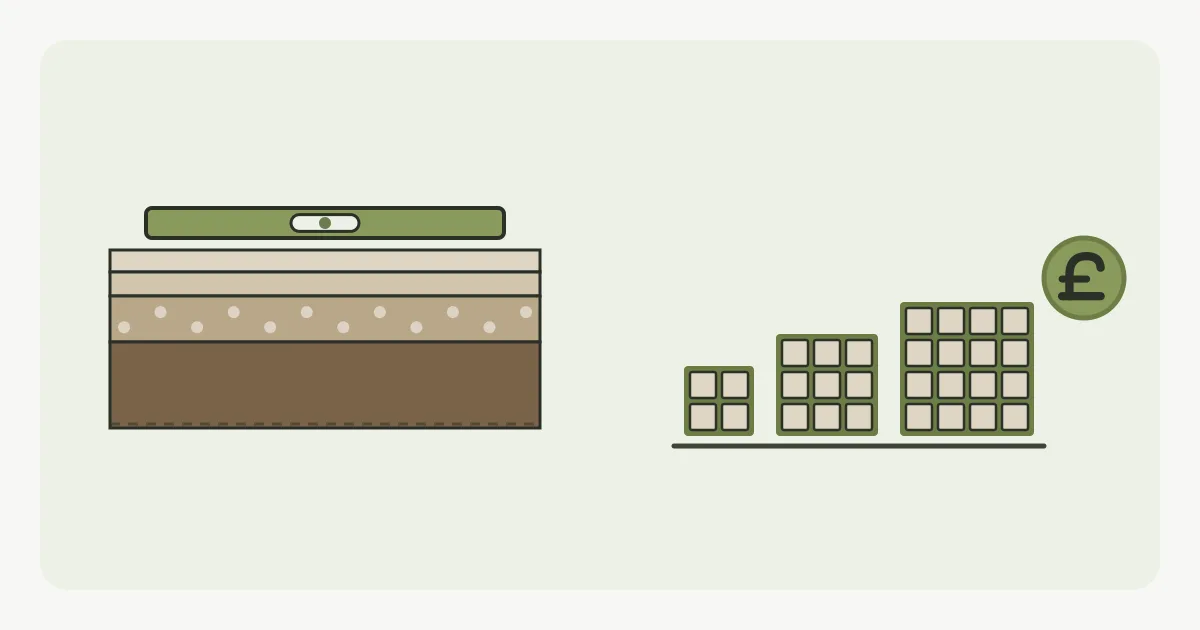
A new patio in the UK typically costs between £1,500 and £5,000 installed. The spread is wide because the figure covers everything from a small seating area laid on level ground to a large patio that needs the ground dug out, a new sub-base built up and drainage designed in. Most domestic jobs land somewhere in the middle. The tables and explanations below should let you work out roughly where yours sits before you start collecting quotes for patio installation.
New patio cost by size
Typical UK installed prices, covering excavation, sub-base, laying, jointing and finishing. Actual quotes vary by region, access and paving material.
| Job size | What's usually involved | Typical cost |
|---|---|---|
| Small patio, up to around 15m² | A seating or dining area on reasonably level ground, straightforward access, standard concrete or budget stone paving | £1,500 – £2,500 |
| Medium patio, around 15–30m² | A full garden patio, some level change to work out, edging and a fall designed in, mid-range paving | £2,500 – £3,800 |
| Large or complex patio, 30m²+ | Larger area, deeper excavation or spoil removal, steps or raised sections, drainage work, premium paving | £3,800 – £5,000+ |
Why a small patio costs more per square metre
Installed, most patios work out at roughly £90 to £170 per square metre. Read across the table above, though, and you'll notice the rate falls as the area grows — a 12m² patio often works out dearer per square metre than a 35m² one. That surprises people, but it follows from how the job is priced.
A patio has a fixed cost before a single slab is laid. Someone still has to turn up, set up, dig out, hire or bring a whip and plate compactor, order a full load of aggregate whether or not the whole load is needed, and get the spoil away. Those costs barely change between 12m² and 35m², so on a small job they're carried by fewer square metres. If your patio sits just below a size where a second day or a second grab lorry is needed, extending it slightly can cost less per square metre than you'd expect.
What pushes a patio quote up
- The paving material. This is the single biggest swing. Budget concrete flags sit at the bottom of the range, while porcelain and better grades of natural stone push a job well above it — see the porcelain patio cost guide and the Indian sandstone patio cost guide for those.
- How much ground has to come out, and where it goes. Excavated soil and old paving are charged by volume to remove. A patio replacing an existing one usually generates more spoil than one going onto lawn.
- Access. If a wheelbarrow can't get from the road to the back garden, every tonne of aggregate and every pack of slabs is carried by hand through the house or over a wall. That's labour, and it can add a day or more.
- Ground conditions. Soft, wet or made-up ground needs a deeper sub-base before it's stable, which means more digging, more aggregate and more compacting.
- Level changes. A garden that slopes across the patio area needs either a retaining edge, a step, or more excavation on the high side — all three add cost.
- Drainage. A patio near the house needs the water taken somewhere sensible. If there's no obvious discharge point, patio drainage work may be quoted alongside the paving.
Ask for excavation, spoil removal, sub-base, bedding, the paving itself, edging and jointing to be listed as separate lines rather than a single price per square metre. Two quotes can look £600 apart and be identical once you find that one excludes taking the soil away. A lower headline price often just means less is covered.
Is a new patio the right job at all?
If you already have a patio and you're weighing up replacing it, it's worth checking what's actually failed before you price up a full rebuild. Loose, crumbling joints across an otherwise sound surface are a repointing job at a fraction of the cost, and a handful of cracked or rocking slabs are usually a repair. Our guide on whether to repair, repoint or replace your patio sets out how to tell which one you're looking at, and the signs your patio needs work checklist covers what to look for. If you're building from scratch, planning a new patio covers size, position and material before you get as far as quotes.
For a rough figure based on your own job, try the patio cost calculator. It won't replace a site visit, but it'll tell you whether the numbers in your head are in the right neighbourhood.
Frequently asked questions
How much does a new patio cost per square metre?
As a guide, most UK patios work out between roughly £90 and £170 per square metre installed, covering excavation, sub-base, laying and jointing. Smaller patios usually sit at the upper end of that because the fixed set-up costs are spread across less area, and premium materials like porcelain sit above it.
Is it cheaper to lay a new patio over an existing one?
Sometimes, but not as often as people hope. It avoids excavation and spoil removal, which is where a chunk of the saving would come from, but it only works if the existing surface is sound, properly drained and low enough that the finished level still sits well below the damp-proof course. If any of those aren't true, laying over the top tends to buy a few years rather than solve anything.
How long does a patio take to install?
Typically two to five days for a domestic patio, depending on size and ground conditions. Excavation and sub-base usually take the first day or two, laying the next, and jointing happens last. Mortar and jointing compounds need curing time afterwards, so the patio generally shouldn't be used for a few days after the installer leaves.
What's the cheapest way to get a patio laid?
Keeping the shape simple is the most effective saving — a rectangle with few cut slabs costs less to lay than a curved or multi-level design in the same area. Choosing a standard-size concrete or budget sandstone flag over large-format porcelain is the next biggest lever. Cutting back on the sub-base is the one saving that isn't worth making, because it's what determines whether the patio is still level in ten years.
Ready to talk to a patio installation specialist?
Get Free Quotes →