
What Is Patio Repair?
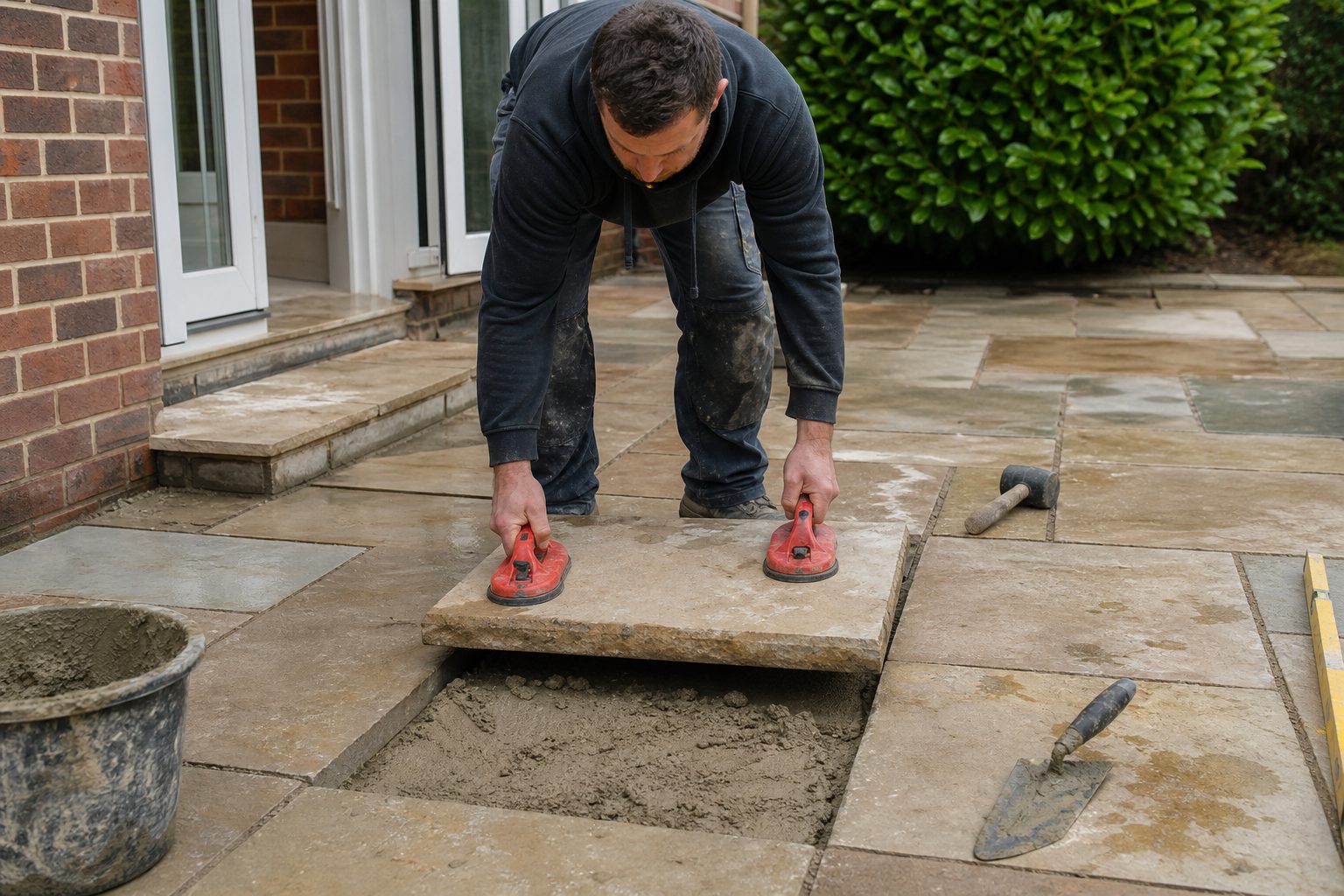
Patio repair covers fixing cracked, sunken, loose or otherwise damaged patio slabs so the surface is safe and even again, without needing to replace the whole patio. It's a targeted job — a specialist lifts and resets or replaces the affected slabs, deals with whatever caused the problem underneath, and reinstates the surface to match the rest of the paving as closely as possible.
It's usually the first call people make when a patio develops a problem, since most damage is localised to one or two slabs rather than the whole area, and there's rarely any need to disturb paving that's still sound.
Signs You Need Patio Repairs
- One or more slabs that have cracked or split
- A slab that's sunk lower than the surrounding paving, creating a trip hazard
- Slabs that rock, wobble or "click" underfoot when stepped on
- Chipped or spalling edges and corners on individual slabs
- A small area of damage surrounded by otherwise sound, well-bedded paving
If the damage is widespread across most of the patio rather than confined to a few areas, it's usually more cost-effective to look at a full patio installation instead — a repair only really pays off when most of the existing surface is still in good condition. Our guide to whether to repair, repoint or replace your patio shows how to work out which side of that line you're on, and the signs your patio needs work checklist covers what to look for.
Patio Repair Methods Explained
The right fix depends on what's actually gone wrong beneath the surface:
- Re-bedding a sunken slab — the slab is lifted, the sub-base underneath is topped up and re-compacted, and the slab is reset level and re-pointed. This is the most common repair, usually caused by a soft spot or washed-out bedding beneath the slab.
- Slab replacement — where a slab is cracked or badly damaged beyond repair, it's lifted out and swapped for a matching replacement, ideally sourced to blend with the weathering of the surrounding paving.
- Edge and corner repair — for smaller chips and spalling, a colour-matched repair mortar can sometimes restore the slab without a full replacement, though this depends on the extent and location of the damage.
What to Include When Asking for a Quote
Sketch out the rough size and shape of the space, describe what's there at the moment, and say what you want the finished patio for — everyday dining, an occasional table, or space for a hot tub, since load-bearing needs change the specification. Mention nearby drains, changes in level, or anything overhead, so the quotes you get back are pricing the same job.
For patio repairs, a contractor should first identify the cause rather than only treating the most obvious symptom. Ask whether the price covers investigation, replacement materials, adjoining defects, testing after the repair and making good. It is sensible to agree how unexpected damage will be photographed and priced before extra work is carried out.
When you're weighing up more than one quote, make sure each one actually breaks down excavation, sub-base, paving material, edging and drainage rather than just quoting a price per square metre — that's the only way to see what's really different between them. Ask specifically whether spoil removal, permits and reinstating the surrounding area are included, since a lower headline price sometimes just means less is covered.
How Much Does Patio Repair Cost?
| Job size | Typical cost |
|---|---|
| Single slab repair | £150 – £300 |
| A few slabs / small area | £300 – £450 |
| Larger repair, multiple areas | £450 – £600+ |
These are indicative UK averages rather than a quote — the number of slabs affected, whether matching replacement paving is needed and what caused the damage in the first place all affect the final price. Get a free, no-obligation quote from a local specialist for a figure based on your own patio.
Our patio repair cost guide explains why several slabs done in one visit costs far less than the same slabs done separately, and what happens when a matching slab can't be found. For a quick ballpark, use the patio cost calculator.
The Patio Repair Process: What to Expect
- Assessment. The specialist inspects the damaged area and identifies the underlying cause, not just the visible symptom.
- Lifting. Affected slabs are carefully lifted, taking care not to damage them if they're being reused.
- Sub-base repair. Any soft, washed-out or poorly compacted base beneath the slab is topped up and re-compacted.
- Resetting or replacing. Slabs are re-bedded level with the surrounding paving, or replaced if damaged beyond repair.
- Pointing and clean-up. Joints are repointed to match the existing patio and the area is cleaned down.
Do You Need Planning Permission for Patio Repairs?
Not at all — repairing an existing patio is straightforward maintenance and doesn't require planning permission or building control approval. This applies even in conservation areas and to listed buildings, since you're restoring an existing surface rather than creating something new — though it's always worth using matching materials if the property has any special designation.
How to Choose a Patio Repair Specialist
- Ask them to explain what's causing the damage, not just how they'll fix the visible symptom
- Check whether they can source a closely matching replacement slab if one is needed
- Confirm how they'll deal with the sub-base, not just the slab itself, to stop the problem recurring
- Ask whether the repair comes with any guarantee against the same issue returning
- Get at least two quotes, especially for larger repairs covering several slabs
Frequently Asked Questions
Can a cracked patio slab be repaired instead of replaced?
Minor chips and hairline cracks can sometimes be filled with a colour-matched repair mortar, but a slab that's fully cracked through or structurally compromised is usually better replaced to avoid the crack spreading or the piece coming loose.
Why has my patio slab sunk?
Sunken slabs are almost always down to a soft spot, poor compaction or washed-out material in the sub-base beneath — fixing the surface without addressing the base underneath it tends to mean the problem comes back.
How long does a patio repair take?
Most patio repair jobs covering a handful of slabs are completed within a day, though larger jobs with several separate damaged areas can take a little longer.
How much does patio repair cost on average?
Most UK patio repairs cost between £150 and £600, depending on how many slabs are affected and whether matching replacement paving is needed. Get a free quote for a price based on your own patio.