
What Is Porcelain Patio Installation?
Porcelain patio installation is the laying of porcelain paving slabs — a dense, kiln-fired ceramic material — to form a new or replacement garden patio. Unlike natural stone, porcelain is manufactured to a consistent thickness and colour, which gives a cleaner, more uniform finish and makes it a popular choice for contemporary garden designs over the last decade.
Homeowners usually choose porcelain either when starting a new patio project and wanting a low-maintenance, modern-looking surface, or when replacing an older concrete or natural stone patio that's become stained, faded or awkward to keep clean.
Signs You Need Porcelain Patio Installation
- An existing patio in concrete or natural stone that's stained, faded or algae-prone despite regular cleaning
- Wanting a sleek, contemporary look with large-format slabs and tight, consistent joints
- A preference for a surface that won't need sealing or re-sanding every couple of years
- Planning a garden that matches an indoor porcelain floor for a seamless "inside-out" look
- Needing a hard-wearing surface for a family garden that gets heavy foot traffic
Porcelain isn't the cheapest paving option, so it tends to suit homeowners who want the low-maintenance benefits and are happy to pay a bit more upfront for the trade-off in cleaning and upkeep further down the line. Our porcelain patio cost guide sets out where that extra cost actually goes, and if you're replacing an existing patio, the signs your patio needs work checklist is worth a look before you commit to a full replacement.
Porcelain Paving Options Explained
Not all porcelain paving is the same, and the options affect both look and price:
- Slab thickness — most garden-grade porcelain is around 20mm thick (sometimes called "2cm" porcelain), which is thicker than indoor porcelain tile and designed to withstand outdoor loads and weather.
- Finish and colour — options range from stone-effect and concrete-effect finishes through to timber-effect planks, letting you get a natural look without the maintenance of the real material.
- Slab size — larger formats give a more minimal, modern appearance with fewer joints, but need a very true, well-prepared base to sit flat without lipping.
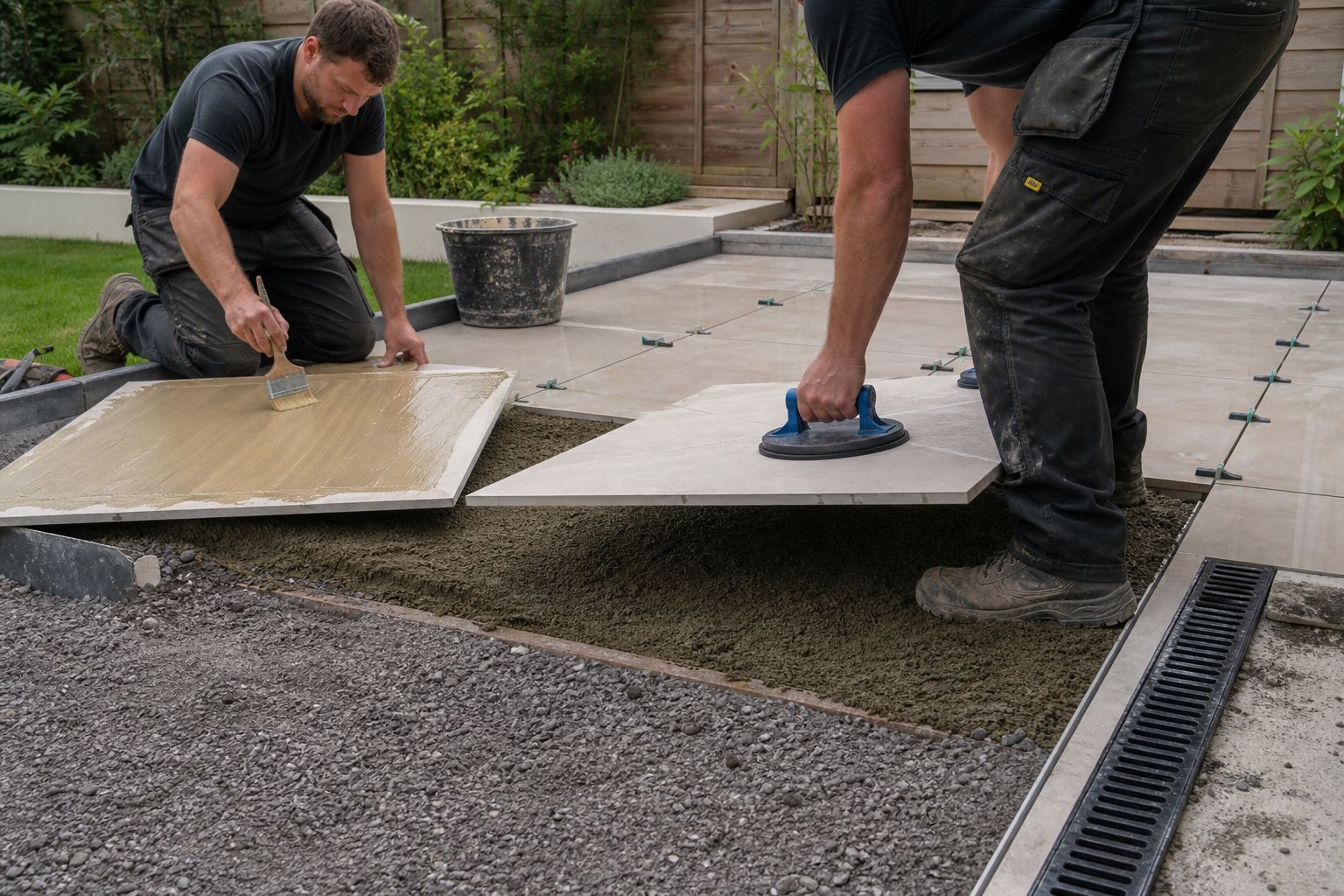
- Laying method — porcelain is typically bedded on a full mortar bed with a bonding slurry on the underside of each slab, or fixed using a pedestal system for raised, drained installations such as roof terraces.
What to Include When Asking for a Quote
Sketch out the rough size and shape of the space, describe what's there at the moment, and say what you want the finished patio for — everyday dining, an occasional table, or space for a hot tub, since load-bearing needs change the specification. Our guide to planning a new patio covers sizing, position and the levels to get right before quotes. Mention nearby drains, changes in level, or anything overhead, so the quotes you get back are pricing the same job.
For porcelain patio installation, ask for the finished level written down against the damp-proof course and any doorways, and where surface water will run to. The written breakdown should separate excavation, base, drainage connections and paving, so it's clear what each stage covers and what happens to the arisings.
When you're weighing up more than one quote, make sure each one actually breaks down excavation, sub-base, paving material, edging and drainage rather than just quoting a price per square metre — that's the only way to see what's really different between them. Ask specifically whether spoil removal, permits and reinstating the surrounding area are included, since a lower headline price sometimes just means less is covered.
How Much Does Porcelain Patio Installation Cost?
| Job size | Typical cost |
|---|---|
| Small porcelain patio (up to around 15m²) | £2,500 – £4,000 |
| Medium porcelain patio (around 15–30m²) | £4,000 – £5,500 |
| Large or premium porcelain patio (30m²+) | £5,500 – £7,000+ |
These figures are indicative UK averages rather than a fixed quote — slab size, finish, colour and how much groundwork is involved all affect the final cost, and premium large-format porcelain sits noticeably above budget ranges. Get a free, no-obligation quote from a local installer for a price based on your own garden.
Our porcelain patio cost guide breaks these figures down per square metre and explains why the laying method adds more than the slabs do. For a quick ballpark, try the patio cost calculator.
The Porcelain Patio Installation Process: What to Expect
- Site survey and slab selection. The installer measures the area and helps you choose slab size, finish and colour.
- Excavation and sub-base. The area is dug out and a compacted, well-drained sub-base is built up to the correct depth.
- Priming. A bonding slurry or primer is applied to the underside of each porcelain slab to ensure good adhesion to the mortar bed.
- Laying. Slabs are bedded, levelled and aligned with consistent joint widths and the correct fall for drainage.
- Jointing and finishing. Joints are filled with a suitable jointing compound and the finished surface is cleaned down.
Do You Need Planning Permission for a Porcelain Patio?
In almost all cases, no — laying porcelain paving in a garden at or near existing ground level is normally permitted development, in the same way as other patio materials. The main points worth checking are whether raising the ground level significantly affects a boundary or neighbouring property, and whether the property is listed or in a conservation area, where extra consent can sometimes apply. When in doubt, a quick check with your local planning department will settle it.
How to Choose a Porcelain Patio Specialist
- Ask whether they have specific experience laying porcelain, as it needs different handling and bonding products to concrete or natural stone
- Check which slab thickness and brand they recommend, and whether it's rated for outdoor/garden use
- Confirm the laying method — full mortar bed versus a pedestal system — and that it suits your garden
- Ask to see a completed porcelain job, since a poorly bedded slab is more likely to crack under point loads than natural stone
- Get at least two or three quotes, and compare the slab specification as closely as the price
Frequently Asked Questions
Is porcelain paving better than natural stone for a patio?
It depends on priorities — porcelain is more consistent in colour, resists staining better and needs very little maintenance, while natural stone like Indian sandstone gives a more traditional, textured look with natural variation between slabs.
Does porcelain paving crack easily?
Quality garden-grade porcelain is very hard-wearing once correctly laid, but it can crack if bedded on an uneven or poorly compacted base, which is why installer experience with the material matters.
Does porcelain paving need sealing?
No, one of the main advantages of porcelain is that it's non-porous and doesn't need sealing, unlike natural stone which usually benefits from a sealant to resist staining.
How much does porcelain patio installation cost on average?
Most UK porcelain patio installations cost between £2,500 and £7,000, depending on the size of the area, slab size and finish chosen. Get a free quote for a price based on your own garden.