
What Is Patio Installation?
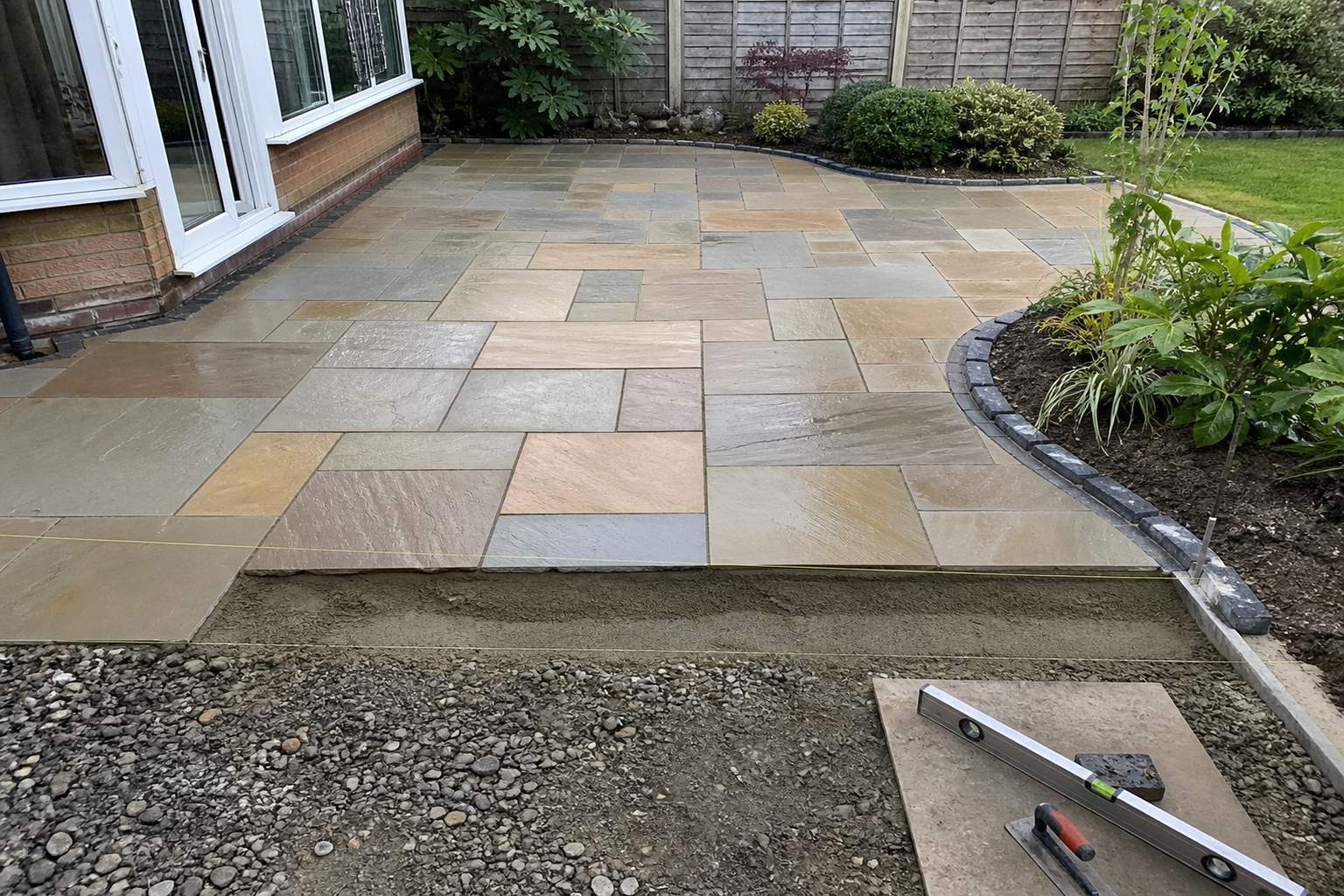
Patio installation is the full job of building a new paved area in a garden from scratch — excavating the ground, laying a proper sub-base, and installing whichever paving material has been chosen, from concrete slabs to natural stone. It's consistently one of the most requested outdoor jobs, mainly because a well-built patio adds usable space for dining, seating or entertaining without the cost or upheaval of an extension.
Most people book a patio installation either because they're starting with bare lawn or borders and want somewhere to put a table and chairs, or because an old, cracked or uneven patio has reached the point where patching it up no longer makes sense and a full replacement is the better option.
Signs You Need a New Patio
- No paved area at all — just lawn, tired decking, or bare soil where you'd like to sit outside
- An existing patio with widespread cracking, sinking or uneven slabs across most of the area
- Weeds growing through the joints faster than you can keep on top of them
- Standing water that pools on the surface after rain instead of draining away
- Wanting a different look, size or material to suit a garden redesign
If the problems are limited to a handful of slabs rather than the whole area, patio repairs might solve it more cheaply — a full installation is usually the right call when the existing surface, or lack of one, no longer works for the space. Our signs your patio needs work checklist goes through the symptoms layer by layer, and repair, repoint or replace? sets out where the line between patching and replacing actually falls.
Patio Installation Options Explained
"Patio installation" covers a range of materials and finishes, and the right choice depends on budget, style and how the space will be used:
- Concrete paving slabs — the most budget-friendly option, available in a wide range of colours and textures, including finishes that mimic natural stone.
- Natural stone — Indian sandstone gives a traditional, textured look with natural colour variation between slabs; see our dedicated Indian sandstone patio installation page for more detail.
- Porcelain paving — a denser, more uniform material that resists staining and fading better than most alternatives; covered in full on our porcelain patio installation page.
- Block paving or brick-effect slabs — smaller units laid in a pattern, often chosen to tie a patio in visually with a block-paved driveway or path.
Beyond material, there's also a choice of laying pattern — stack bond, running bond, or a random "riven" layout for irregular stone — plus edging detail, which a good installer should talk through with you before any digging starts.
What to Include When Asking for a Quote
Sketch out the rough size and shape of the space, describe what's there at the moment, and say what you want the finished patio for — everyday dining, an occasional table, or space for a hot tub, since load-bearing needs change the specification. Our guide to planning a new patio covers how to size and position it before you get this far. Mention nearby drains, changes in level, or anything overhead, so the quotes you get back are pricing the same job.
For patio installation, ask for the finished level written down against the damp-proof course and any doorways, and where surface water will run to. The written breakdown should separate excavation, base, drainage connections and paving, so it's clear what each stage covers and what happens to the arisings.
When you're weighing up more than one quote, make sure each one actually breaks down excavation, sub-base, paving material, edging and drainage rather than just quoting a price per square metre — that's the only way to see what's really different between them. Ask specifically whether spoil removal, permits and reinstating the surrounding area are included, since a lower headline price sometimes just means less is covered.
How Much Does Patio Installation Cost?
| Job size | Typical cost |
|---|---|
| Small patio (up to around 15m²) | £1,500 – £2,500 |
| Medium patio (around 15–30m²) | £2,500 – £3,800 |
| Large or complex patio (30m²+) | £3,800 – £5,000+ |
These are indicative UK averages rather than a quote — the paving material, ground conditions, access and any extra groundwork or drainage needed will all move the final price. Get a free, no-obligation quote from a local installer for a figure based on your own garden.
For the full breakdown — including why smaller patios work out dearer per square metre — read our patio installation cost guide, or try the patio cost calculator for a quick ballpark figure.
The Patio Installation Process: What to Expect
- Site survey and design. The installer measures the area, discusses materials and layout, and checks levels and drainage falls.
- Excavation. Turf, soil or old paving is dug out to the correct depth for the new build-up.
- Sub-base construction. Compacted hardcore or aggregate is laid in layers to create a stable, well-drained foundation.
- Laying the paving. Slabs are bedded on mortar (or an approved laying system for some porcelain products), levelled and aligned to the correct falls.
- Jointing and finishing. Joints are filled with mortar or a brush-in jointing compound, edges are finished, and the area is cleaned down.
Do You Need Planning Permission for a New Patio?
Usually not — a garden patio built at or near existing ground level is normally considered permitted development, since it doesn't create the same kind of impermeable run-off towards a public road that a new driveway can. It's worth bearing in mind that raising the ground level significantly, particularly close to a boundary or a neighbour's wall, can raise party wall or boundary considerations worth discussing with your neighbour first, and a patio within the curtilage of a listed building or in a conservation area may need extra checks. If you're at all unsure, a quick call to your local planning department will confirm it before you start.
How to Choose a Patio Installation Specialist
- Ask to see photos or references from previous patio installations, ideally in a similar material
- Check what's included in the quote — excavation, waste removal, sub-base and jointing should all be itemised
- Confirm how drainage and surface falls will be handled so water doesn't pool or run towards the house
- Ask about guarantees on workmanship, separate from any manufacturer guarantee on the paving itself
- Get at least two or three quotes so you can compare price, material options and timescales
Frequently Asked Questions
How long does a patio take to install?
Most domestic patio installations take between two and five days, depending on the size of the area, the paving material chosen and how much groundwork is needed.
What's the cheapest type of patio to install?
Concrete paving slabs are generally the most affordable option, while natural stone and porcelain sit at the higher end due to material cost and, in porcelain's case, the specialist laying products involved.
Can a new patio be laid over an old one?
Sometimes, but it depends on the condition of the existing surface and whether the extra height it adds is acceptable against doorways and damp-proof courses — in most cases installers will recommend removing the old paving first.
How much does a new patio cost on average?
Most UK patio installations cost between £1,500 and £5,000, depending on the size of the area and the paving material chosen. Get a free quote for a price based on your own garden.