
What Is Patio Repointing?
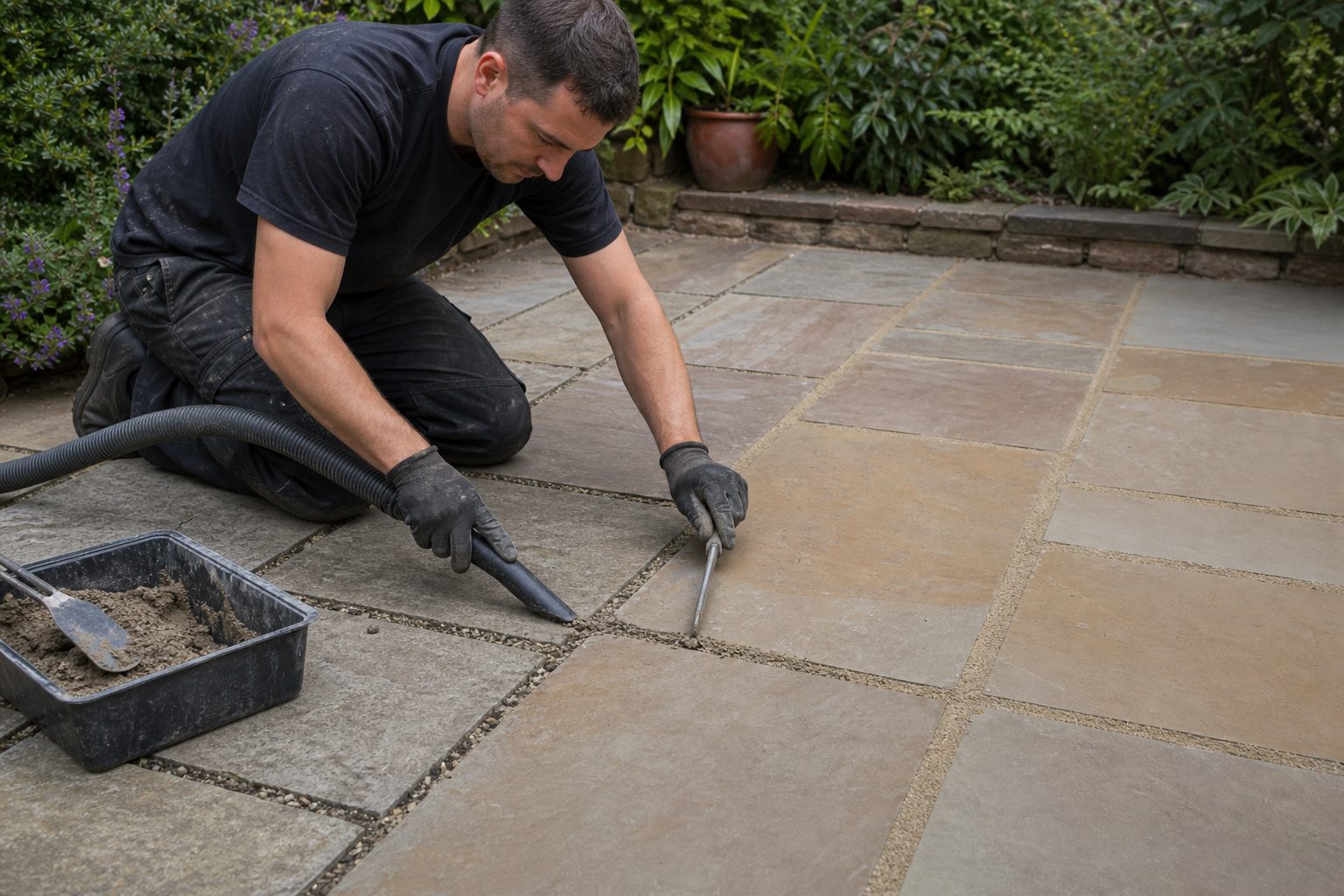
Patio repointing is the job of removing old, loose or crumbling mortar from between the joints of a paved patio and replacing it with fresh pointing, restoring a stable, weatherproof surface without having to lift and relay the slabs themselves. It's the paving equivalent of repointing brickwork — the slabs stay put, but the material holding them together and keeping water out gets renewed.
Repointing is usually needed well before a patio's slabs themselves wear out, because mortar joints take the brunt of weathering, frost and foot traffic and tend to fail years before the paving underneath does.
Signs You Need Patio Repointing
- Mortar joints that are cracked, crumbling or missing in places
- Individual slabs that rock or feel loose underfoot, even though they're not sunken
- Weeds and moss establishing themselves in gaps between slabs
- Water pooling at joint lines rather than draining away across the surface
- Joints that have visibly discoloured, eroded or washed out compared to the rest of the patio
If it's just the joints causing problems and the slabs themselves are sound, flat and undamaged, repointing is usually all that's needed — see patio repairs if individual slabs are cracked or sunken as well. Our signs your patio needs work checklist separates the three layers so you can tell which one has failed, and repair, repoint or replace? covers what to do when more than one has.
Patio Repointing Methods Explained
There are two main approaches, and the right one depends on the existing patio and the finish wanted:
- Traditional cement mortar repointing — old mortar is raked out and new mortar mixed and pressed into the joints by hand, then tooled to a neat finish. It's a reliable, cost-effective method that suits most natural stone and concrete patios.
- Brush-in jointing compound — a resin or polymeric jointing compound is brushed into cleaned, dry joints and left to cure. It's faster to apply, often more flexible (reducing future cracking) and is commonly used on porcelain and tighter-jointed modern patios.
Whichever method is used, the old material has to be properly raked out and the joints cleaned before new pointing goes in — rushing this step is the most common reason a repointing job fails early.
What to Include When Asking for a Quote
Sketch out the rough size and shape of the space, describe what's there at the moment, and say what you want the finished patio for — everyday dining, an occasional table, or space for a hot tub, since load-bearing needs change the specification. Mention nearby drains, changes in level, or anything overhead, so the quotes you get back are pricing the same job.
For patio repointing, a contractor should first identify the cause rather than only treating the most obvious symptom. Ask whether the price covers investigation, replacement materials, adjoining defects, testing after the repair and making good. It is sensible to agree how unexpected damage will be photographed and priced before extra work is carried out.
When you're weighing up more than one quote, make sure each one actually breaks down excavation, sub-base, paving material, edging and drainage rather than just quoting a price per square metre — that's the only way to see what's really different between them. Ask specifically whether spoil removal, permits and reinstating the surrounding area are included, since a lower headline price sometimes just means less is covered.
How Much Does Patio Repointing Cost?
| Job size | Typical cost |
|---|---|
| Small area / a few joints | £300 – £600 |
| Medium patio, full repoint | £600 – £900 |
| Large patio, full repoint | £900 – £1,200+ |
These are indicative UK averages rather than a quote — patio size, the pointing method chosen and how much old mortar needs raking out before the new joints go in all affect the final price. Get a free, no-obligation quote from a local specialist for a figure based on your own patio.
Our patio repointing cost guide explains why raking out the old joints is most of the bill, and how mortar and brush-in compounds compare on price. For a quick ballpark, use the patio cost calculator.
The Patio Repointing Process: What to Expect
- Inspection. The specialist checks the condition of the existing joints and the slabs themselves to confirm repointing is the right fix.
- Raking out. Old, loose or crumbling mortar is removed from the joints, usually with a grinder or raking tool.
- Cleaning. Joints are cleared of debris, moss and dust so the new material can bond properly.
- Repointing. New mortar or jointing compound is applied and tooled or brushed to a neat, consistent finish.
- Curing and clean-up. The patio is left to cure undisturbed for the recommended time before normal use resumes.
Do You Need Planning Permission for Patio Repointing?
No — repointing an existing patio is maintenance work rather than a new structure, so it doesn't require planning permission or building control sign-off in virtually all cases. The one exception would be a patio within the grounds of a listed building, where even minor works can occasionally need consent, so it's worth a quick check if that applies to your property.
How to Choose a Patio Repointing Specialist
- Ask which pointing method they'd recommend for your paving type and why
- Check whether old mortar removal (raking out) is included in the price or costed as an extra
- Ask about drying and curing times, and whether the patio needs to be kept dry or traffic-free afterwards
- Check for evidence of public liability insurance
- Get at least two quotes to compare method, price and expected finish
Frequently Asked Questions
How long does patio repointing last?
A properly repointed patio using a good-quality mortar or jointing compound should last 10 years or more, though harsh weather, tree roots and heavy use can shorten that.
Can I repoint a patio myself?
It's possible for a small, accessible area, but raking out old mortar without damaging the slab edges and getting a neat, weatherproof finish across a full patio takes practice, which is why most people bring in a specialist for anything beyond a few joints.
What's the difference between repointing and regrouting a patio?
They're generally the same job by different names — both describe renewing the material between paving joints, whether that's traditional mortar or a modern jointing compound.
How much does patio repointing cost on average?
Most UK patio repointing jobs cost between £300 and £1,200, depending on the size of the patio and how much old mortar needs removing first. Get a free quote for a price based on your own patio.