
What Is Indian Sandstone Patio Installation?
Indian sandstone patio installation is the laying of natural sandstone paving, quarried mainly in the Rajasthan region of India, to build a new or replacement garden patio. Each slab is cut from natural rock, so no two are quite identical — the colour, texture and subtle veining vary piece to piece, which is exactly what gives it the traditional, "quarried" look so many UK gardens go for.
It's typically chosen either for a new patio where a period or cottage-garden feel is wanted, or to replace tired concrete slabs with something that ages more gracefully and develops a bit of character over time rather than just looking worn.
Signs You Need Indian Sandstone Patio Installation
- Wanting a natural, textured surface rather than the uniform look of concrete or porcelain
- An existing patio that's dated, worn out, or simply the wrong material for the style of the house and garden
- Planning a garden refresh where a traditional or informal aesthetic is the goal
- Starting a new patio and wanting a material that will weather naturally and gain character with age
- Needing paving to match or complement existing sandstone paths, walling or steps elsewhere on the property
If your priority is a completely uniform, low-maintenance finish instead, it's worth comparing against porcelain patio installation, which trades some of that natural character for consistency and easier upkeep — our Indian sandstone patio cost guide and porcelain patio cost guide put the two side by side on price.
Indian Sandstone Options Explained
Indian sandstone is sold in several finishes and colours, and the choice affects both look and cost:
- Riven finish — the traditional, naturally split surface with texture and subtle undulation, giving the most "quarried" appearance.
- Sawn/calibrated finish — cut to a consistent thickness on the underside for a more even lay, often with a smoother top surface.
- Colour ranges — from classic buff and autumn browns through to grey, black and multi-coloured "rainbow" blends, so the material can be matched to the property.
- Slab format — available as single-size or, more commonly, in project packs mixing several sizes for a randomised, natural-looking layout.
Because it's a natural, porous stone, sandstone is usually sealed after laying and jointing to help resist staining, algae growth and the slow fading that can otherwise occur, especially on lighter colours.
What to Include When Asking for a Quote
Sketch out the rough size and shape of the space, describe what's there at the moment, and say what you want the finished patio for — everyday dining, an occasional table, or space for a hot tub, since load-bearing needs change the specification. Our guide to planning a new patio covers sizing, position and the levels to settle before quotes. Mention nearby drains, changes in level, or anything overhead, so the quotes you get back are pricing the same job.
For indian sandstone patio installation, ask for the finished level written down against the damp-proof course and any doorways, and where surface water will run to. The written breakdown should separate excavation, base, drainage connections and paving, so it's clear what each stage covers and what happens to the arisings.
When you're weighing up more than one quote, make sure each one actually breaks down excavation, sub-base, paving material, edging and drainage rather than just quoting a price per square metre — that's the only way to see what's really different between them. Ask specifically whether spoil removal, permits and reinstating the surrounding area are included, since a lower headline price sometimes just means less is covered.
How Much Does Indian Sandstone Patio Installation Cost?
| Job size | Typical cost |
|---|---|
| Small sandstone patio (up to around 15m²) | £2,000 – £3,300 |
| Medium sandstone patio (around 15–30m²) | £3,300 – £4,700 |
| Large sandstone patio (30m²+) | £4,700 – £6,000+ |
These are indicative UK averages rather than a quote — stone colour and finish, slab thickness, ground conditions and whether sealing is included all move the final price. Get a free, no-obligation quote from a local installer for a figure based on your own garden.
Our Indian sandstone patio cost guide explains why calibrated and hand-cut stone are priced differently, and where sealing should appear on the quote. For a quick ballpark, use the patio cost calculator.
The Indian Sandstone Patio Installation Process: What to Expect
- Site survey and stone selection. The installer measures the area and helps you choose colour, finish and slab format.
- Excavation and sub-base. The area is dug out and a compacted, well-drained sub-base is built up.
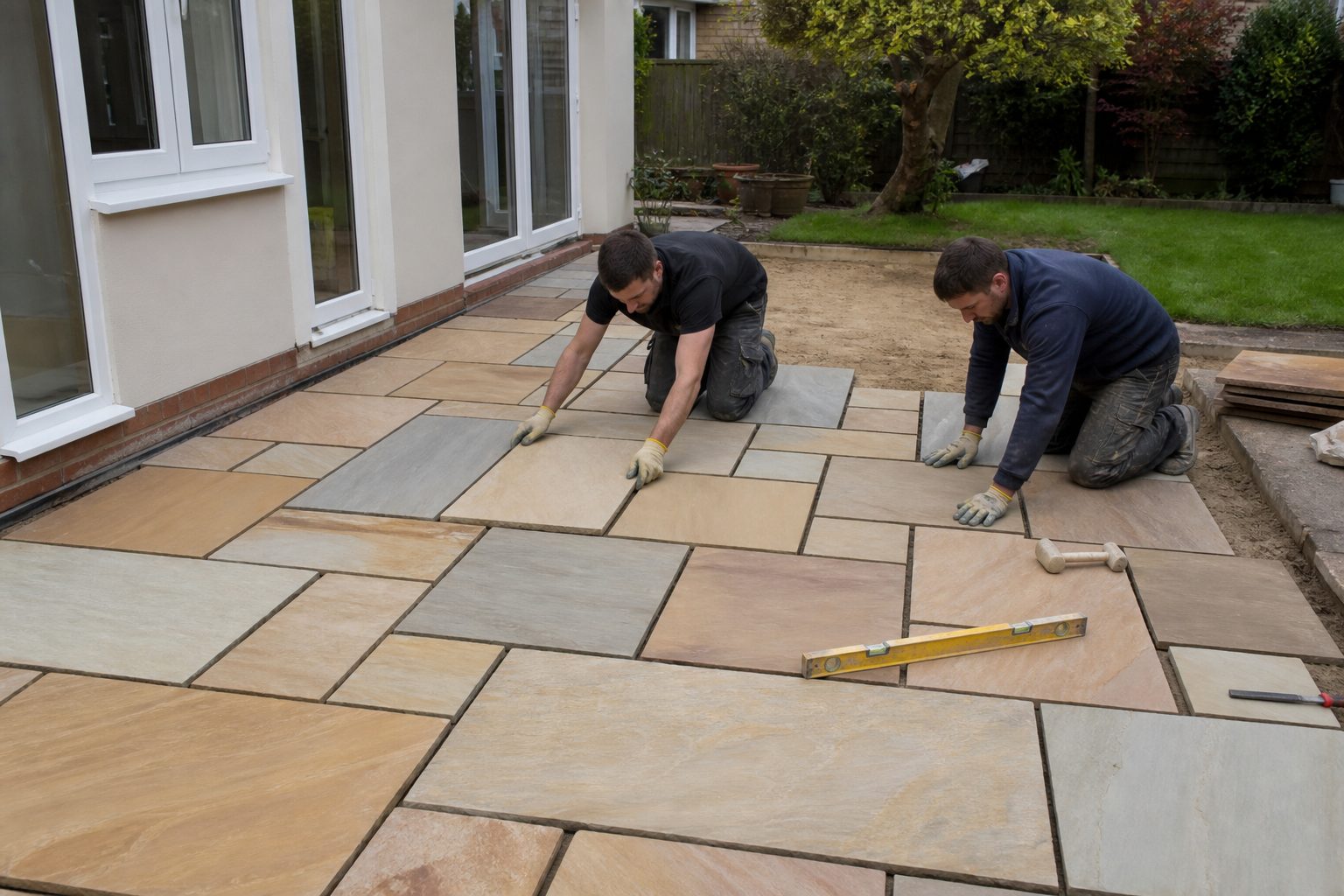
- Laying. Slabs are bedded on mortar, checking thickness variations between individual stones so the finished surface stays level.
- Jointing. Joints are filled with a mortar or brush-in compound suited to natural stone.
- Sealing and finishing. Once cured, the patio is typically cleaned and sealed to protect against staining and weathering.
Do You Need Planning Permission for an Indian Sandstone Patio?
In almost all cases, no — laying natural stone paving in a garden at or near existing ground level is normally permitted development, the same as with other patio materials. Points worth checking are whether significantly raising ground level affects a neighbouring boundary or wall, which can raise party wall considerations, and whether the property is listed or in a conservation area, where extra consent can apply. If you're unsure, a quick check with your local planning department is the safest first step.
How to Choose an Indian Sandstone Patio Specialist
- Ask to see the actual stone or a large sample, since colour and texture vary noticeably between batches
- Check whether the price includes sealing, and if so, how many coats and what product is used
- Ask how they'll manage the natural variation in slab thickness that comes with riven stone
- Confirm the sandstone's source and check it's been ethically and legally quarried
- Get at least two or three quotes and compare the stone specification, not just the headline price
Frequently Asked Questions
Does Indian sandstone need sealing?
It's generally recommended, since sandstone is porous and unsealed stone is more prone to staining, algae growth and colour fading over time — most installers include sealing as part of the job or offer it as an add-on.
How long does an Indian sandstone patio last?
With proper installation and periodic resealing, an Indian sandstone patio can easily last 20 years or more, and the natural material tends to weather gracefully rather than looking simply worn out.
Is Indian sandstone slippery when wet?
Riven sandstone has a naturally textured surface that generally provides good grip when wet, though a sawn or heavily sealed finish can be smoother — worth asking your installer about slip resistance for high-traffic areas.
How much does an Indian sandstone patio cost on average?
Most UK Indian sandstone patio installations cost between £2,000 and £6,000, depending on the size of the area and the colour and finish chosen. Get a free quote for a price based on your own garden.