
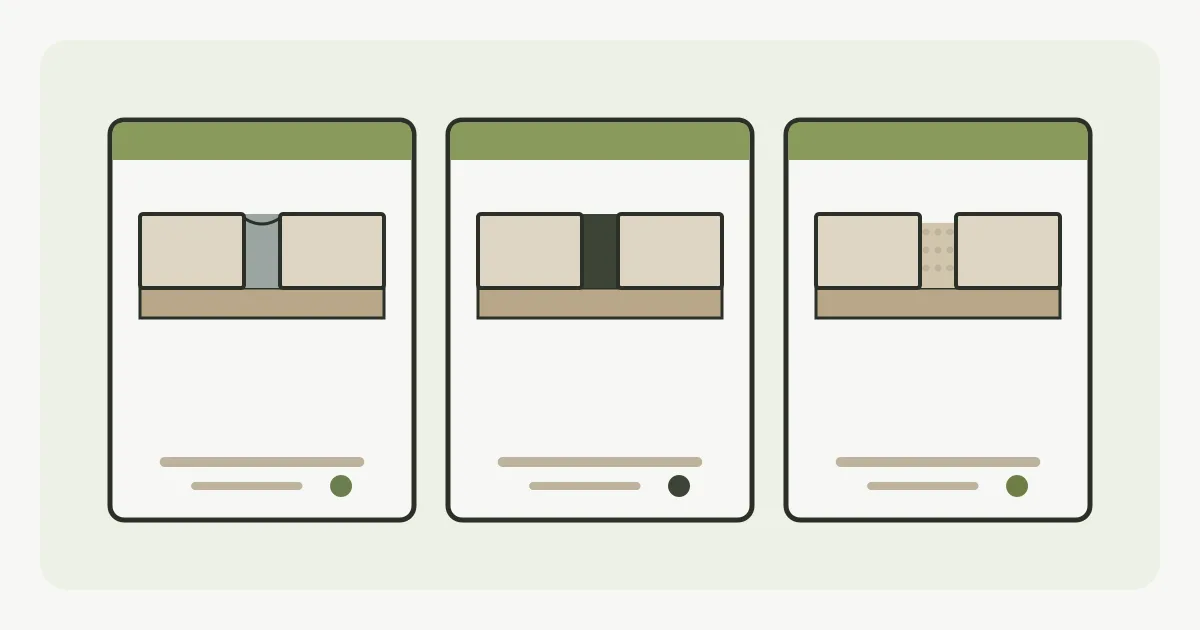
This page compares the main categories of patio jointing material by how they work, what joints they suit and what they need to cure. We don't name or rank products, and we haven't tested any. Products within each category differ, sometimes a lot, so the instructions on the tub you actually buy always win over anything general written here.
Joints are the first part of a patio to wear out, so the material in them matters more than people expect. Our patio repointing page names the two main approaches, traditional mortar and brush-in compounds. In practice there are four fills you'll come across on a patio, and the right one depends mostly on how wide your joints are, what the slabs are made of and when the work is happening.
The four options side by side
General characteristics of each category. Joint sizes, temperatures and cure times vary by product.
| Sand and cement mortar | Slurry grout | Brush-in resin compound | Polymeric jointing sand | |
|---|---|---|---|---|
| How it goes in | Pressed into each joint and tooled | Wet mix spread over the surface and worked into joints | Swept into joints, then compacted | Swept into joints, then set with water |
| Best joint width | Wide and irregular joints | Medium to wide | Medium; most specify a minimum width and depth | Narrow |
| Flexibility | Rigid; can crack with movement | Rigid | More flexible | Some flexibility |
| Weed resistance | Good while intact | Good while intact | Good | Fair to good |
| Weather when applying | Dry, frost-free | Dry, frost-free | Depends on the product; some tolerate damp | Dry |
| Material cost | Lowest | Low | Highest | Moderate |
| Labour | Slowest | Fast on large areas | Fast | Fast |
| Typical use | Natural stone, traditional patios | Porcelain and natural stone, new installs | Repointing; porcelain and modern patios | Block paving and some narrow-jointed patios |
Sand and cement mortar
The traditional method, and still the most common on natural stone. Mortar is mixed on site, pressed into each joint with a pointing trowel and finished to a neat profile. The materials are cheap; the time is in the labour, joint by joint. It copes with wide, uneven joints that other fills can't, which is why riven sandstone patios are so often pointed this way.
It's rigid, though. If slabs move even slightly, through frost, tree roots or a soft spot in the bed, mortar joints crack rather than flex, and water gets in. It needs dry, frost-free weather to cure and smears easily on stone, so a careful hand matters. A tired mortar patio is the classic repointing job.
Slurry grout
A wetter cement-based mix, often with additives, that's spread over the surface and worked into the joints with a squeegee or brush, then the slabs are cleaned off before it sets. It's much quicker than hand-pointing on a large area and gives full, consistent joints. It's widely used on new porcelain patios, where the slabs' dense surface makes cleaning off easier. On porous stone there's a higher risk of staining, so a good installer will protect or pre-wet the surface as the product requires.
Brush-in resin jointing compound
A ready-to-use compound, usually sold in tubs, that's swept into the joints and compacted. It cures in place to a firm, slightly flexible fill. This is the method most homeowners mean by 'patio jointing compound', and the one most suited to DIY. Many are designed to be applied to wet slabs, which helps the compound flow and keeps it off the surface, but others need dry joints, so it's worth reading the tub before buying.
Its strengths are speed, a clean finish and some flexibility, which means fewer cracked joints over time. Its limits are joint size, since most products state a minimum width and depth they need to stay in place, and cost: per square metre it's several times dearer in materials than mortar. On a big patio, the labour saved can make up for that.
Polymeric jointing sand
Fine sand blended with a binder that sets when it's wetted. It's swept into narrow joints and then lightly sprayed with water. It's more often used on block paving and setts than on slab patios, and it works best where joints are tight and consistent. In wide patio joints it's generally less durable than a resin compound or mortar, and heavy pressure washing will strip it.
Plain kiln-dried sand, the kind brushed into block paving, isn't really a patio jointing material. It doesn't set, so on a slab patio it washes out and invites weeds.
Which fill for which patio
- Riven sandstone with wide, irregular joints: mortar, or a brush-in compound if the joints meet its minimum size.
- Porcelain with narrow, consistent joints: a brush-in compound suitable for porcelain, or a slurry grout on a new install.
- Repointing a patio yourself: usually a brush-in compound. Our guide to DIY patio repointing covers the preparation.
- A patio with a history of cracked joints: a more flexible compound, after finding out why the slabs are moving. Repointing can't fix a loose slab; that's a patio repair.
- Winter work: check the minimum temperature on the product, and expect mortar work to wait for a mild spell.
Whatever you choose
No jointing material survives being laid over shallow, loose old pointing. The joints need raking out to the depth the product requires, and cleaning, before anything new goes in. That step, not the choice of fill, is the main reason repointing jobs succeed or fail, and it's most of the cost. The patio repointing cost guide explains why. For a new patio, jointing is the last stage of the build, covered in how a patio is laid.
Frequently asked questions
What is the best jointing compound for a patio?
There isn't one best product for every patio. Brush-in resin compounds are quick, tidy and slightly flexible, and suit most repointing and porcelain jobs where the joints are wide and deep enough. Mortar suits wide, irregular natural stone joints. Polymeric sand works best in narrow joints.
Can brush-in jointing compound be used on porcelain?
Many can, and they're commonly used on porcelain. Check that the product says it's suitable for porcelain and that your joints meet its minimum width and depth.
Is mortar or jointing compound better for a sandstone patio?
Both are used. Mortar is cheaper in materials and copes with wide, uneven joints, but it's rigid and can crack if slabs move. A brush-in compound is quicker and more flexible, provided the joints are wide and deep enough for it.
Can you use jointing compound in winter?
Some brush-in compounds can be applied in cooler or damp conditions, but every product has a minimum temperature and a cure time during which frost should be avoided. Mortar needs frost-free weather to cure. Check the instructions before booking winter work.
Ready to talk to a patio repointing specialist?
Get Free Quotes →